![]()
Introduction to the Equipment
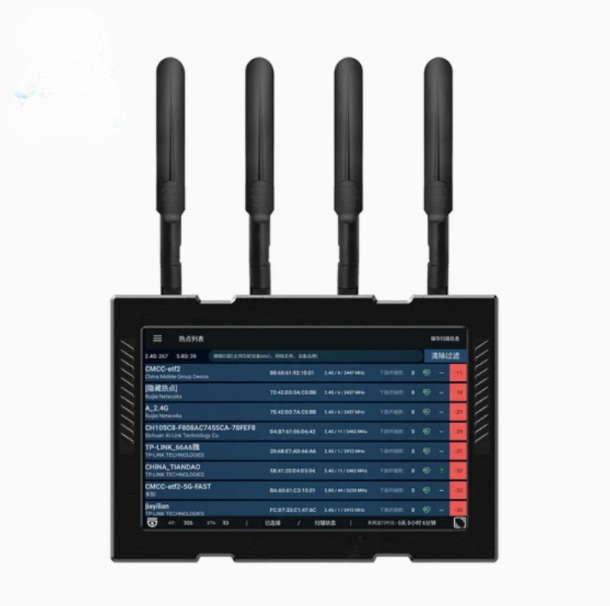
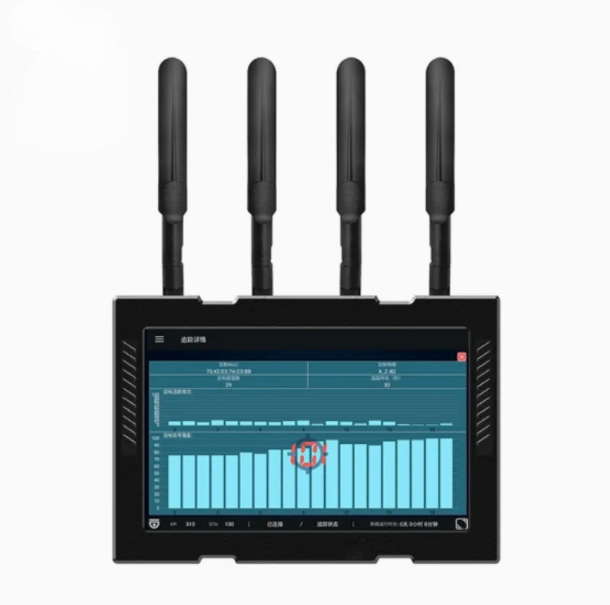
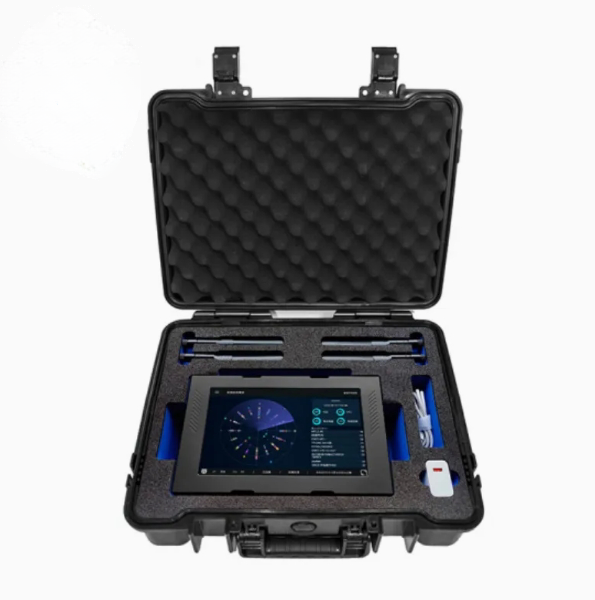
The WiFi wireless network detection analyzer is a device designed for conducting wireless signal analysis and precise positioning of WiFi terminal devices such as mobile phones, computers, and wireless cameras. By receiving wireless signals emitted by wireless terminals like mobile phones during communication with wireless access points, the device demodulates and analyzes the target signals, thus analyzing and summarizing the surrounding wireless signals. Additionally, it can precisely locate the target by measuring the wireless signal strength of both the WiFi terminal and the wireless hotspot. The analyzer also supports interfering with and counteracting the target wireless signal, hindering its normal network activities.
The WiFi wireless network detection analyzer is capable of accurately analyzing, within a large area, the wireless network names (SSID), MAC addresses of devices, wireless channels, encryption methods, wireless signal strength (RSSI), and other relevant information of hidden and open wireless hotspots and wireless terminal devices in the space. It also possesses functions such as precise positioning, searching, and blocking control. The analyzer boasts high capture rate, effective management and control, and high positioning accuracy.
The WiFi wireless network detection analyzer is widely used in technical reconnaissance departments of public security, national security, confidential departments, security bureaus, and national institutions for wireless network detection and analysis.
Equipment Functions
The equipment supports scanning of hotspots and terminals operating on 2.4G, 5.2G, and 5.8G frequency bands. It also supports scanning of devices with WiFi enabled but not connected to any network. It can detect the activity level of targets (hotspot detection supports various WiFi routers, AP access points, portable WiFi access points, printer hotspots, soft APs, and mobile phone hotspots, while terminal detection supports various WiFi terminals, desktop computers, laptops, tablets, mobile phones, smart home devices, WiFi cameras, etc.).
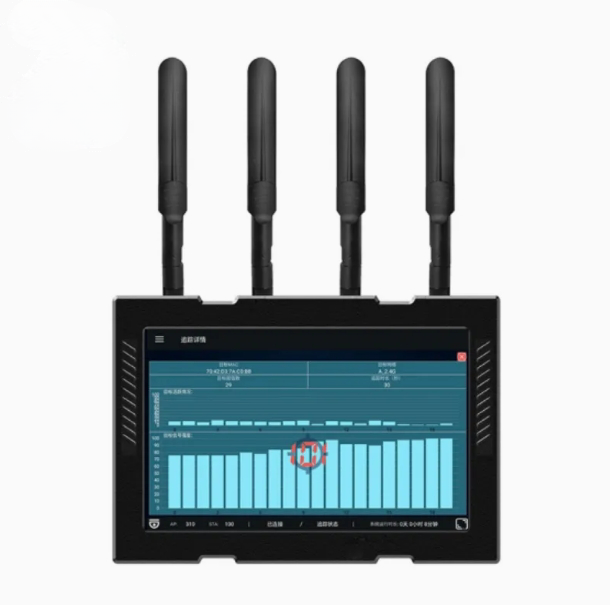
The WiFi wireless network detection analyzer adopts an integrated design in hardware, equipped with four high-gain omnidirectional antennas that can scan indoor targets. It can also use an external directional antenna for large-scale scanning, and better target positioning can be achieved through the directional characteristics of the positioning antenna.
The software is equipped with the latest WIFI wireless analysis and positioning system, supporting wireless frequency bands: 2.4G, 5.2G, 5.8G, and wireless channels: 2.4G: 1-13, 5.G: 36, 40, 44, 48, 52, 56, 60, 64, 100, 104, 108, 112, 116, 120, 124, 128, 132, 136, 140. It can simultaneously track signals from multiple channels and multiple targets. A unique signal tracking algorithm is adopted, significantly improving the ability to accurately locate targets. At the same time, the equipment supports activation measures for target terminals with small data volumes, optimizing the situation where target wireless signals cannot be captured for a long time when the target is silent.
Equipment Features
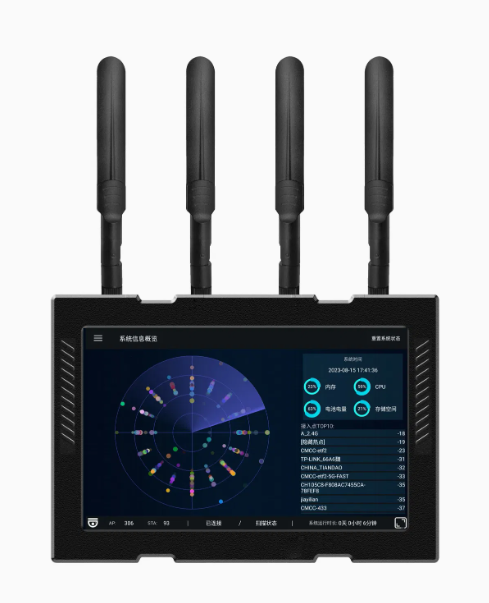
1. Complete wireless network analysis function, analyzing and presenting the surrounding wireless network environment in the form of icons. Intuitively showing the network topology of the surrounding wireless environment.
2. The equipment scans the surrounding wireless networks, obtaining information such as the wireless network name (SSID), device MAC, wireless channel, encryption method, wireless signal strength, etc. of surrounding wireless devices. It analyzes and presents the connection relationship between wireless access points and wireless terminals based on the scanned information.
3. The equipment adopts a passive search mode for wireless protocol data packets and a measurement technique based on wireless signaling, with a target RSSI monitoring range of -0dbm to -120dbm. The positioning scan frequency can exceed
10 times per second.
4. Supports in-depth analysis of suspected WiFi camera target devices to further confirm the device type.
5. Supports analysis of abnormal changes in the wireless environment, analyzing devices that appear or disappear abnormally in the environment, and supporting analysis of target devices accompanying the environment under changing conditions.
6. Supports multi-target tracking under 2.4G and 5G frequency bands, with tracking effects related to the number of targets.
7. Supports precise positioning of hotspots and terminal devices under 2.4G and 5G frequency bands.
8. Supports countermeasures against targets under 2.4G and 5G frequency bands, providing full-channel countermeasures for the wireless environment around this equipment.
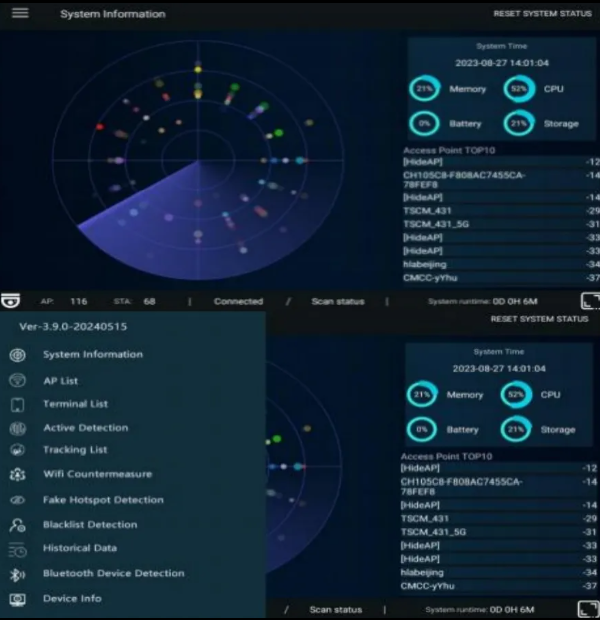
9. Supports blacklist settings with blacklist detection alarms.
10. Supports pseudo-hotspot detection function, automatically alarming when a pseudo-hotspot is detected.
11. Supports the function of saving historical detection data, with saved files including information such as save time, save location, equipment authorization unit, and equipment operator.
12. Supports the comparison function of historical detection data, allowing comparison of changes in hotspots and terminal devices in two scanning data sets, including devices that remain unchanged, devices that disappear, and newly appearing devices.
13. Supports the collision function of historical detection data, allowing comparison of 3 hotspots and terminal devices that exist simultaneously in multiple scanning data sets.
14. Supports dynamic adjustment of the scanning range, allowing dynamic adjustment of 10 levels to filter out weakly-signaled non-concerned devices in the periphery, facilitating target search.
15. Supports the function of judging the changing trend of signal strength for hotspots and terminal devices, displaying the signal changes of devices in the environment (increasing, decreasing, or remaining unchanged).
16. Supports the function of analyzing hidden hotspots, able to detect hidden hotspots and terminal devices connected to them in the environment, and supports resolving the real names of hidden hotspots.
17. Supports the function of saving screenshots of the device's operating interface.
18. Supports downloading and exporting saved detection data and system screenshots (exported data in excel format for easy viewing).
19. support for brief analysis of the current wireless environment, support for radar map showing the distribution of hotspot distance, support for hotspot channel distribution map showing the environment hotspot channel occupancy situation
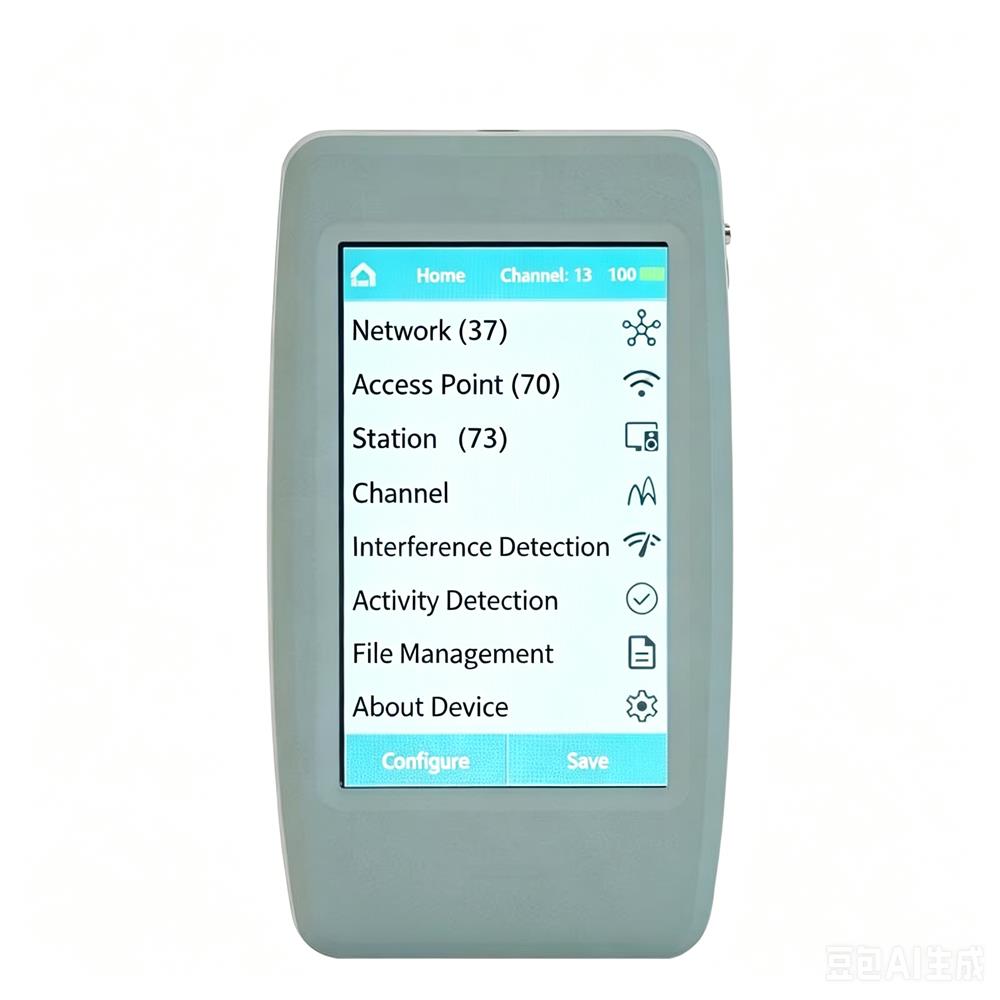
20. equipment size is compact and highly integrated, portable design, easy to operate handheld, built-in rechargeable battery, full load endurance of more than 4 hours, detection of good covert operation detailed instructions.
| Device Parameters |
| Type | Parameters |
| WirelessStandard | IEEE 802.11a/b/g/n/ac |
| FrequencyBands | 2.4G.5.2G.5.8G |
| WirelessSignal Channel | 2.4G:1-135G:36, 40, 44, 48,52,56,60,64,100,104,108,112,116,120,124, 128,132,136,140 |
| AntennaInterface | SMA X450Ω |
| ReceiverSensitivity | -5dBm~-100dBm |
| DetectionDistance | Indoor10-50m Outdoor50-300m |
| ScanningRange | 10 AdjustableLevels |
| Position Accuracy | <0.3 M |
| BatteryLife | >4HourCan work for along time whenconnected to thepowersupply |
| Device weight | 1.9kg |
| DeviceSize | 280mmX185mmX40mm |
| DeviceHardware | Integratedhardware equipment |
| Operating System | Linuxsystem
|
| Dual band omnidirectional antenna |
| AntennaFrequency | 2400-2500MHz/5150-5850MHz |
| AntennaGain | 8dB |
| AntennaStandingWave | ≤1.5 |
| PolarizationMethod | Vertical/horizontalpolarization |
| InputImpedance | 50 Ω |
| AntennaInterface | SMA |
| ExternalDimension | 158mmX20mm |
| Working Temperature | -40℃~+85℃ |
![]()